Zero Capital · On-Farm · Point of Consumption
Fresh hydroponic fodder,
grown on your farm, in seven days.
Greenfield Hydroponics installs and operates a fully automated fodder plant on your property at our expense, under a multi-year Off-Take Agreement — cutting methane, water use, and transport cost out of your feed program.
Why hydroponic forage
Rising temperatures and shrinking groundwater are pushing feed production toward vertical, indoor, point-of-consumption growing.
Methane
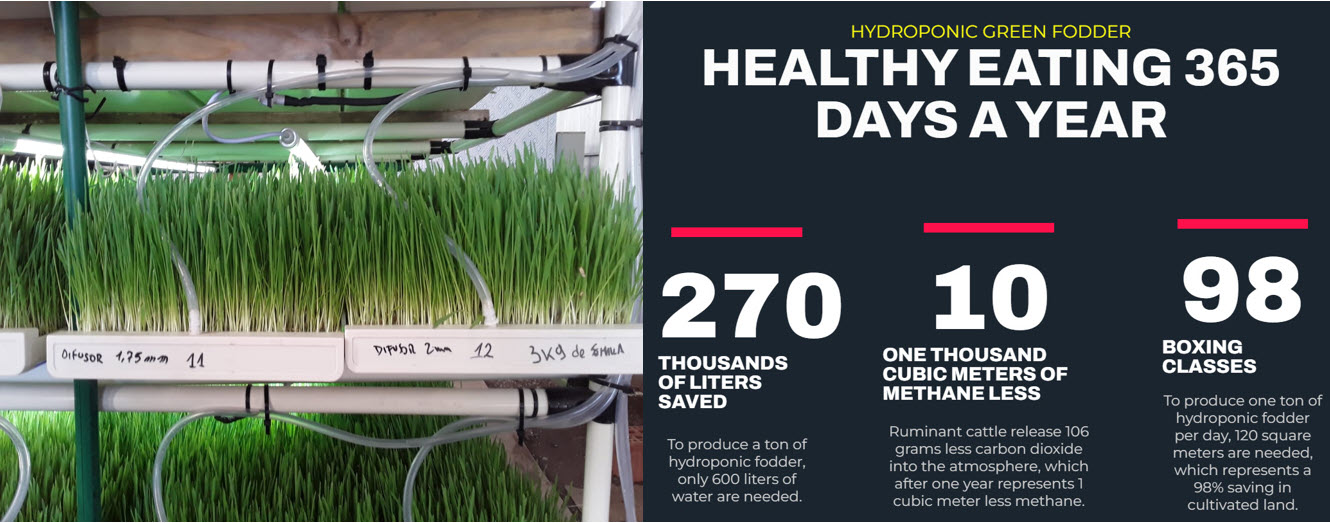
Higher digestibility means more efficient ruminal fermentation and lower methane output per animal.
Water use
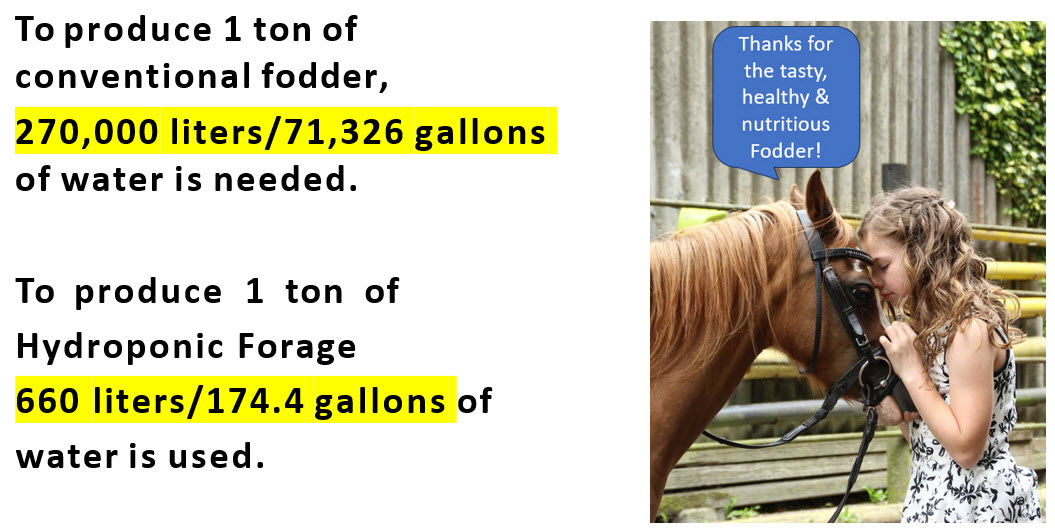
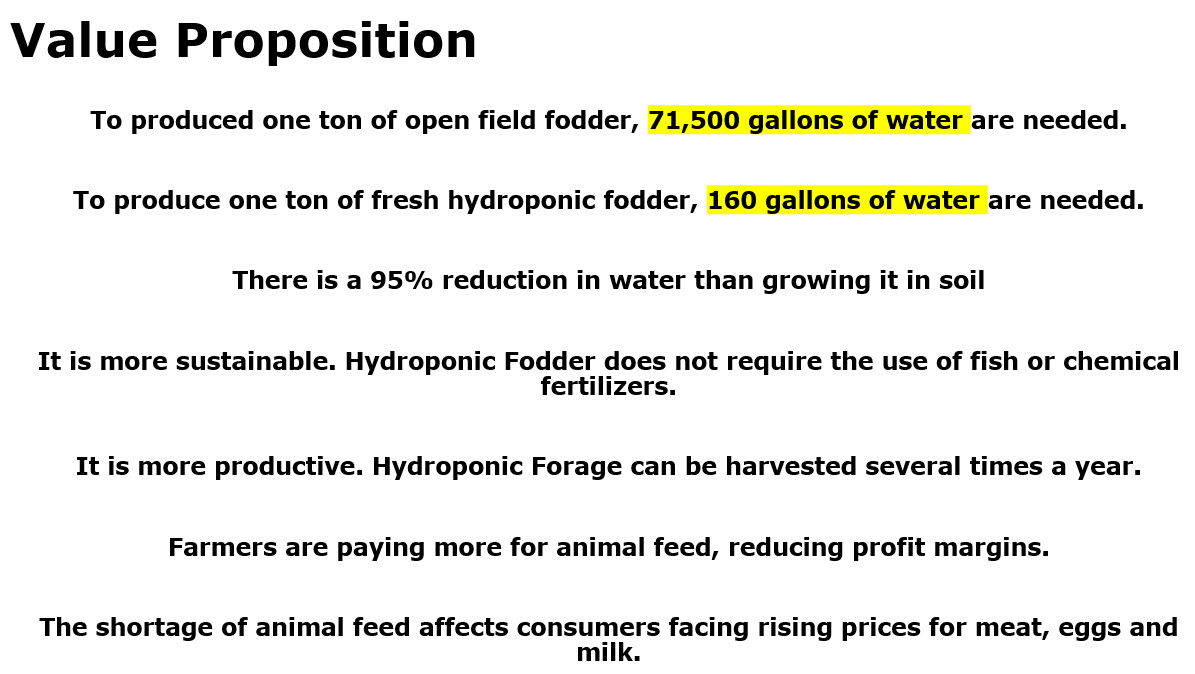
Sprouted-grain hydroponics uses a fraction of the water required by conventional field-grown forage.
Seed to feed
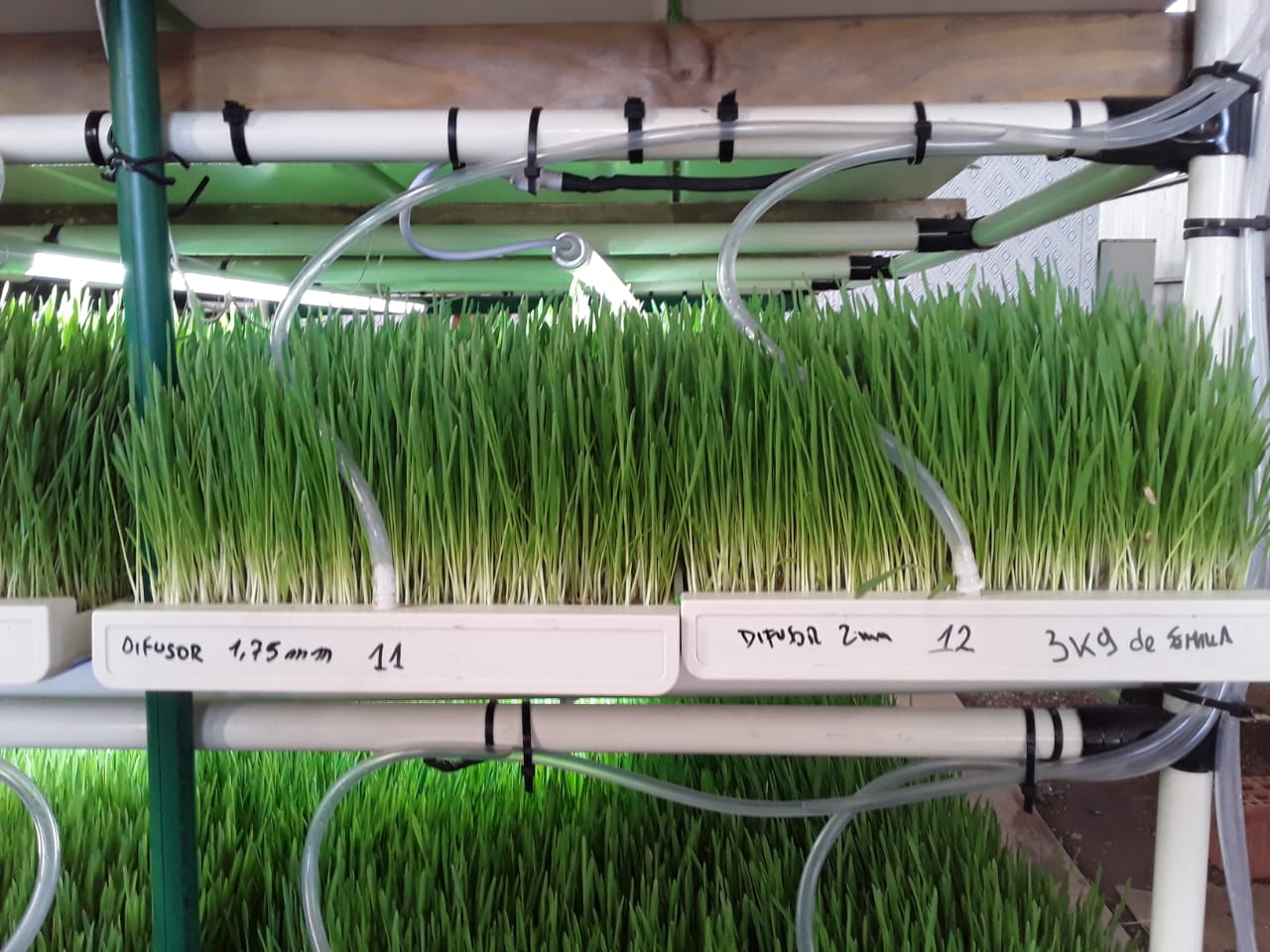
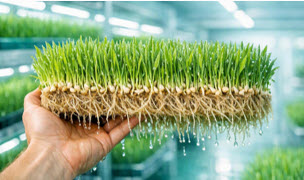
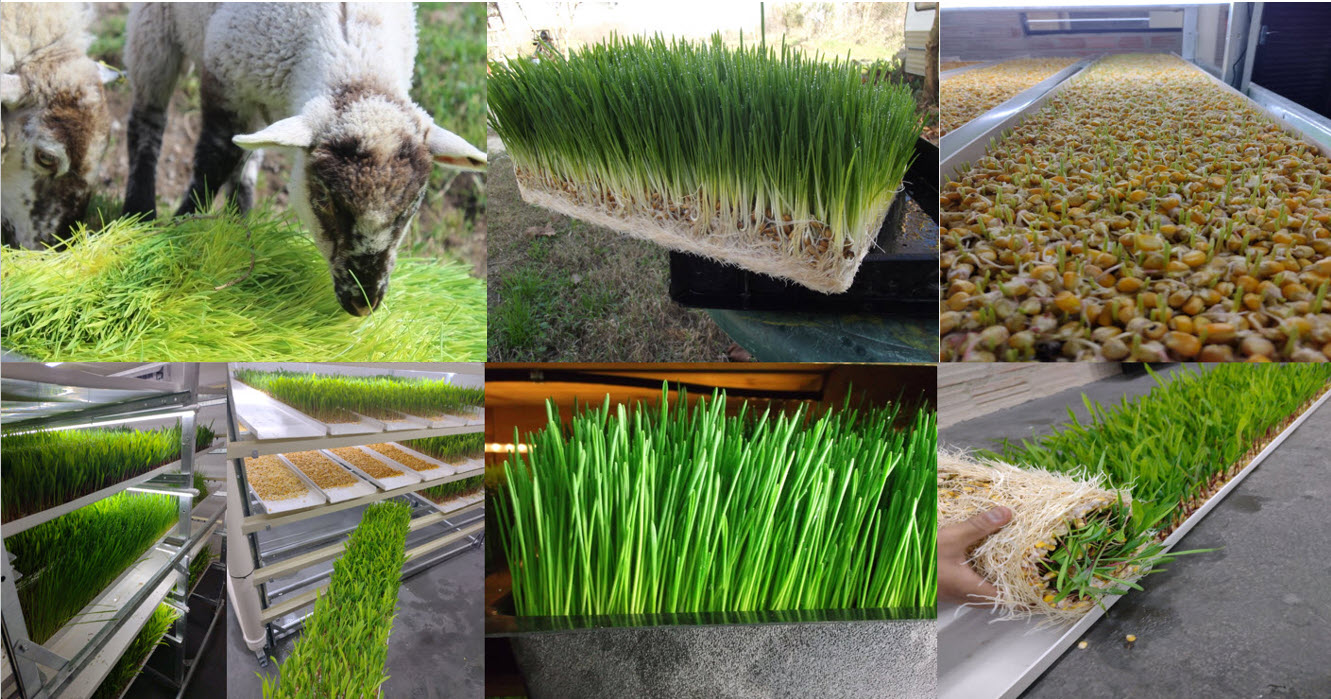
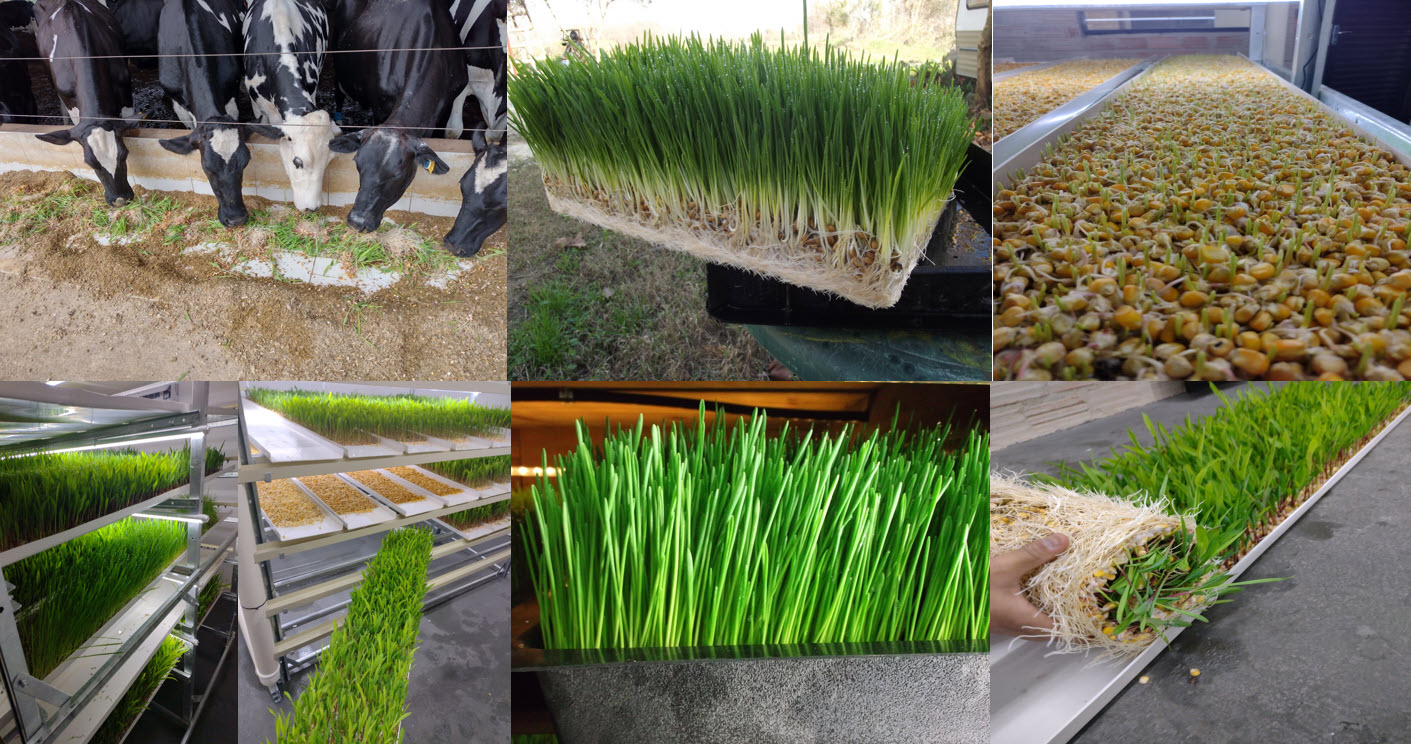
Barley moves from seed to harvestable mat in seven days, delivered fresh daily at the point of consumption.
About Greenfield Hydroponics
Based in Clemson, South Carolina, Greenfield Hydroponics has spent more than a decade developing automated hydroponic forage systems, working alongside research partners at Clemson University and the University of São Paulo. The company's patented cultivation plants are designed to maximize yield while minimizing labor and operating cost, tailored to each farm's herd size and layout.
Animal Forage
Organic, pesticide-free feed engineered for both livestock and human nutrition applications.
Automated Systems
Fully automated cultivation from seeding through harvest, run by an on-site plant operator.
Off-Take Model
Multi-year supply agreements that lock in fresh fodder daily with no transport cost.
Species programs
Specialized fodder formulations by species. Reach out to marketing for a program tailored to your herd.
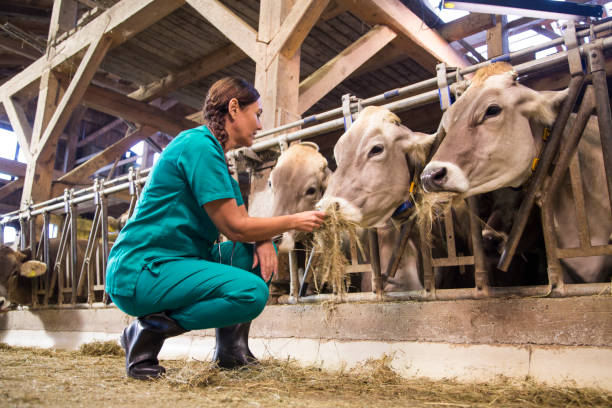
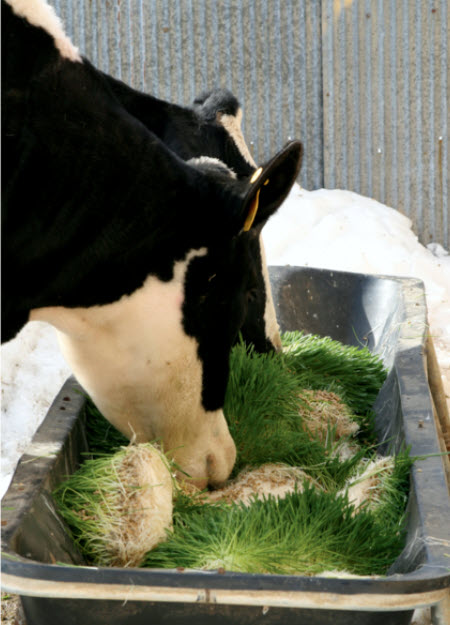
Hydroponic Cow Fodder
Reduces methane by 60%
Higher digestibility means more efficient ruminal fermentation, lower methane output, and richer protein, vitamin, and mineral content than conventional dairy and fattening-cattle feed — backed by a fresh daily supply contract.
Speed & scalability
A much shorter grow cycle than field cultivation, easily adapted across species and production volumes.
Climate independence
Controlled temperature, humidity, and lighting keep output consistent and resilient to drought or flooding.
High production density
Large forage volumes from a small footprint, with automation that reduces specialized labor.
Pair fodder with the Greenfield AI Collar for full herd visibility, or get a proposal sized to your herd and daily feed requirements.
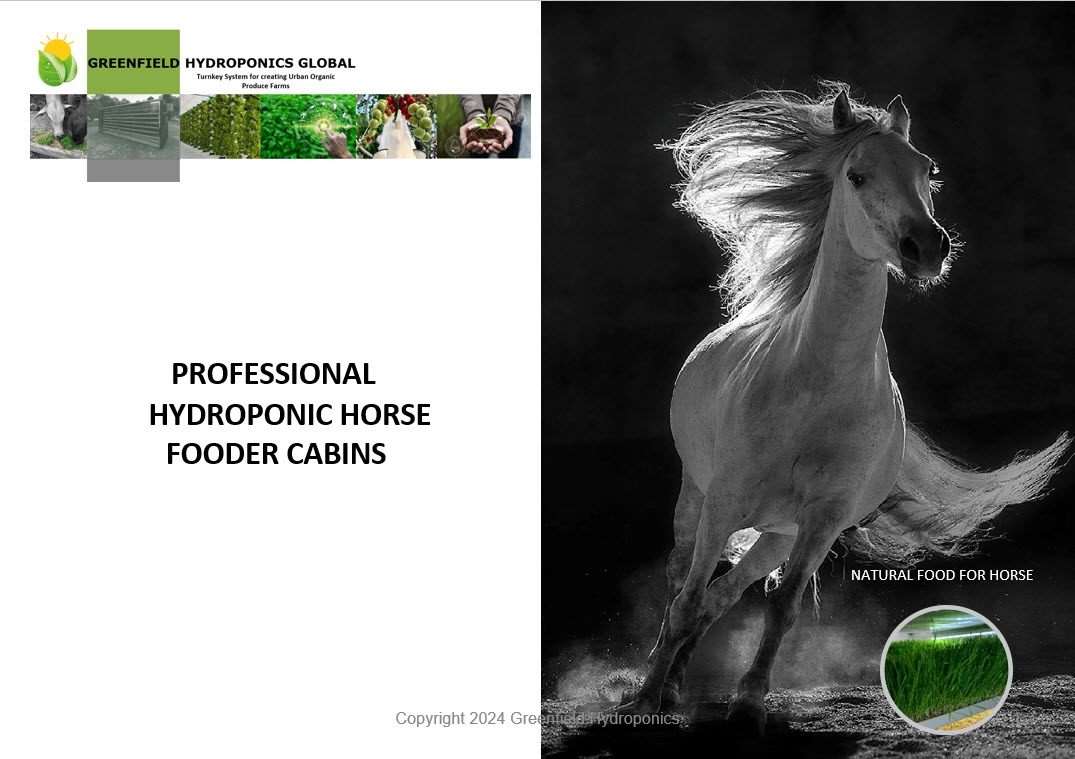
Horse Fodder Systems
Organic controlled growth, no pesticides
A dedicated hydroponic configuration sized for equine operations, delivered and run at the point of consumption.
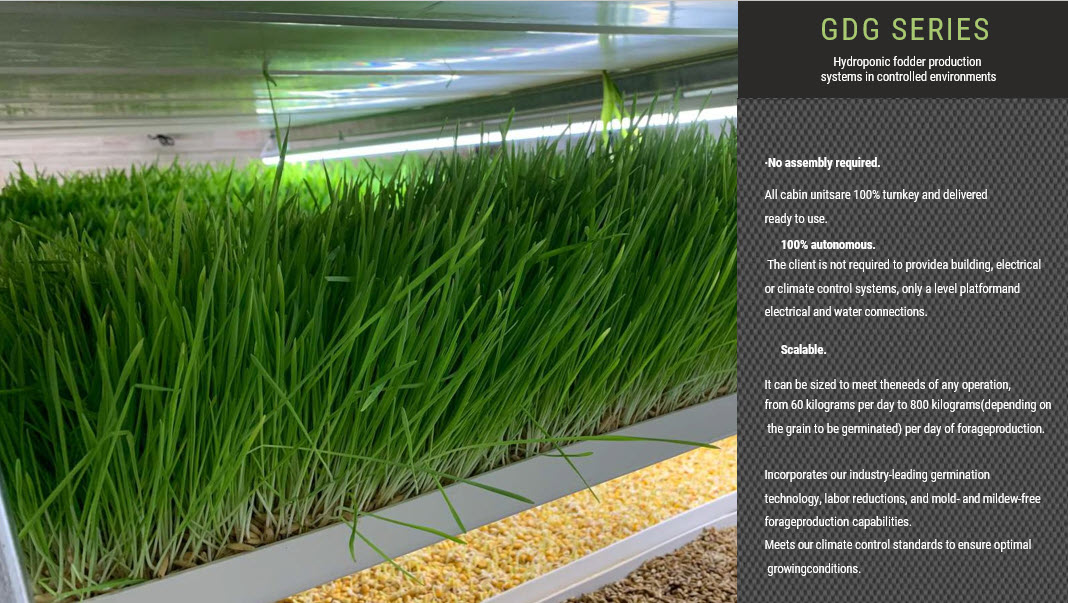
- Structure High-grade aluminum components
- Grow trays Food-grade PVC
- Irrigation Drip & flood, with atomizer nebulizer
- Water system Full recirculation
- Lighting Wide-spectrum LED
- Controls Proprietary PLC system
- Monitoring Smartphone notification reports
As with our other species programs, the higher digestibility of hydroponic forage supports more efficient digestion and richer protein, vitamin, and mineral content than conventional feed — backed by a fresh-supply contract with no weather-dependent gaps.
Tell us your herd size and daily feed requirements (lbs or kg) for a complimentary preliminary proposal.
Get a proposalHydroponic Sheep Fodder
ESG advantages over traditional feed cultivation
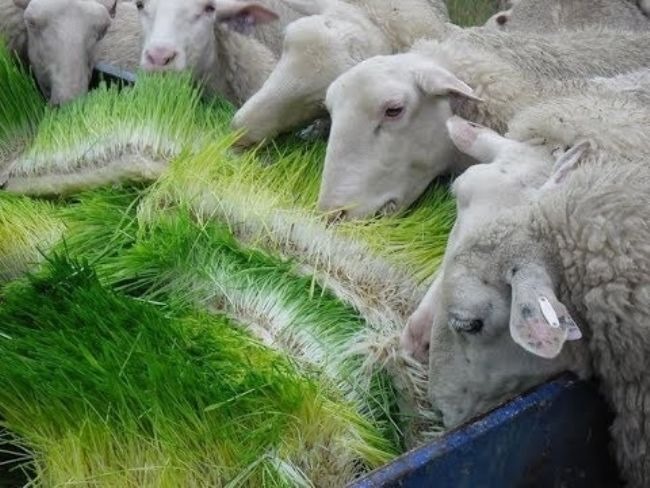
Better digestibility means sheep and other ruminants produce less methane breaking the feed down, and the resulting forage runs higher in protein, vitamins, and minerals than most conventional fodder — supporting steadier growth and herd health under a fresh-supply feed contract.
Speed & scalability
A much shorter grow cycle than field cultivation, easily adapted across species and production volumes.
Climate independence
Controlled temperature, humidity, and lighting keep output consistent and resilient to drought or flooding.
High production density
Large forage volumes from a small footprint, with automation that reduces specialized labor.
Our engineering team will size a system to your flock and daily feed requirements (lbs or kg) — reach out for a complimentary preliminary proposal.
Get a proposalHydroponic Pig Fodder
ESG advantages over traditional feed cultivation
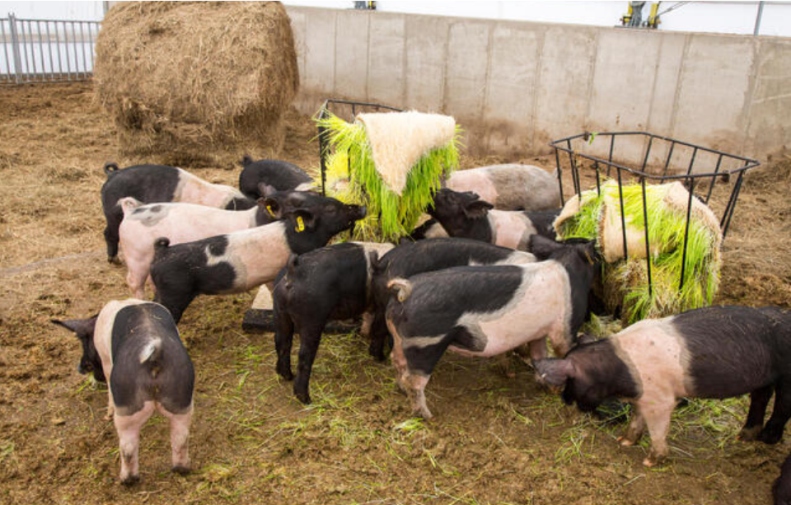
The same high-digestibility profile that benefits ruminants also improves nutrient absorption for pigs — richer protein, vitamins, and minerals, better feed conversion, and a fresh daily supply under contract with no weather-dependent gaps.
Speed & scalability
A much shorter grow cycle than field cultivation, easily adapted across species and production volumes.
Climate independence
Controlled temperature, humidity, and lighting keep output consistent and resilient to drought or flooding.
High production density
Large forage volumes from a small footprint, with automation that reduces specialized labor.
Our engineering team will size a system to your herd and daily feed requirements (lbs or kg) — reach out for a complimentary preliminary proposal.
Get a proposalInterested in a species-specific program? Contact the marketing team directly.
amo@GreenTechnologyGlobal.comFodder As A Service Program
Traditional feed vs. hydroponic fodder
Warming climate trends are straining outdoor growing conditions and depleting natural groundwater. Farmers are shifting to alternative, point-of-consumption technologies — vertical, indoor growing chief among them.
How a program starts
Three inputs let our engineering team scope your system.
01 · Herd size
Number of animals you want to feed with fodder.
02 · Current feed
Average daily consumption per animal on your existing diet.
03 · Target cost
Your target daily cost to feed each animal.
We'll return a preliminary scope of work, an MOU, and a proposal for a 100% Off-Take Agreement.
Fodder Benefits
No capital investment by the farmer
Greenfield Hydroponics installs and operates the automated fodder plant on your farm at our expense, producing fresh fodder daily for your herd under a multi-year Off-Take Agreement.
Proven advantages of hydroponic fodder
Methane
Better digestibility means more efficient ruminal fermentation and lower methane per animal.
Higher protein
Richer in protein, vitamins, and minerals than many conventional fodders.
Better conversion
Exceptional digestibility improves nutrient absorption and feed conversion, supporting faster, healthier weight gain.
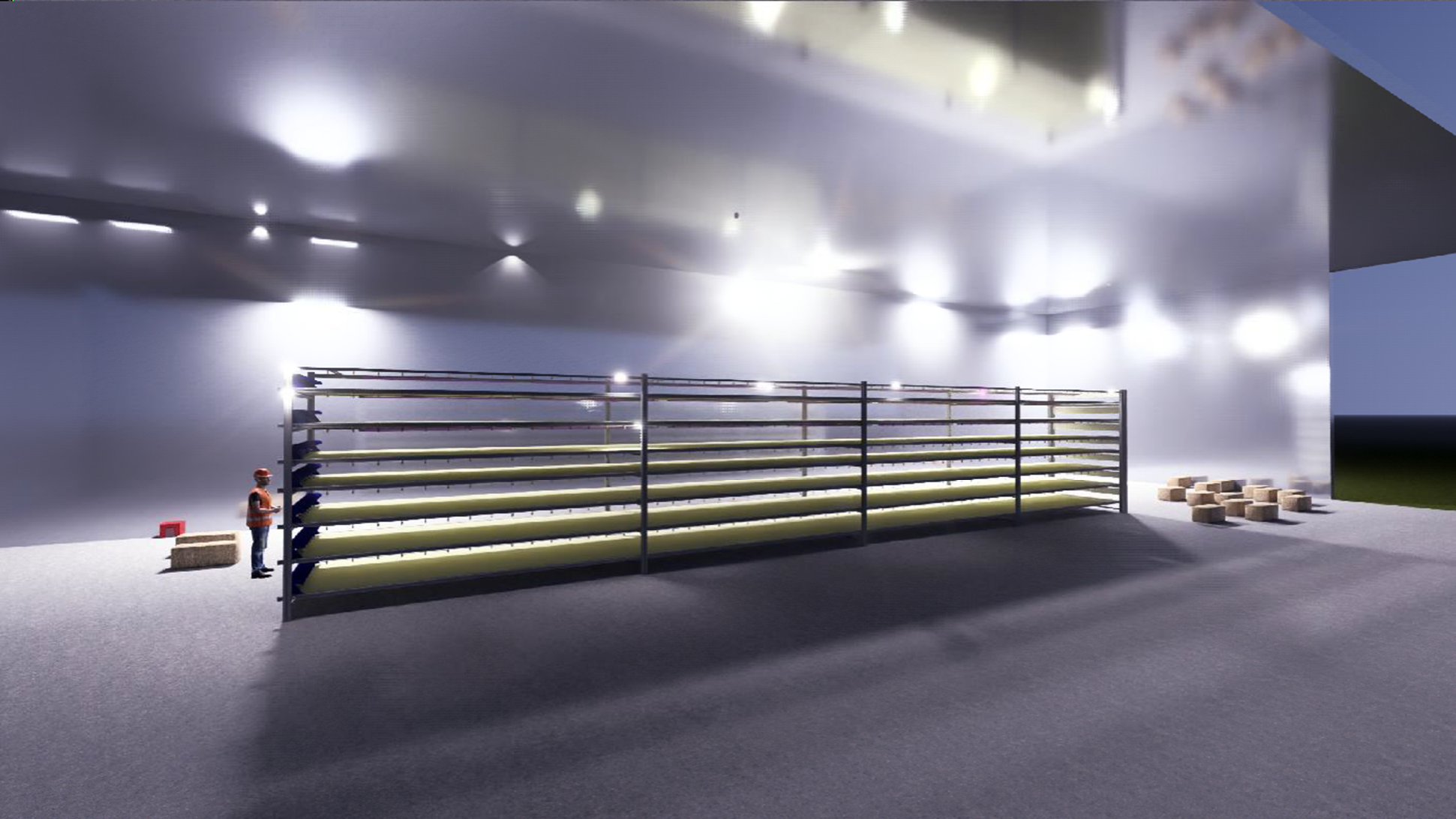
GHI 8000 System advantages
- Operational efficiency Full automation, minimal labor
- Durability Aluminum, corrosion-resistant
- Food hygiene & safety Automated cleaning & disinfection
- Sustainability Optimized water & energy use
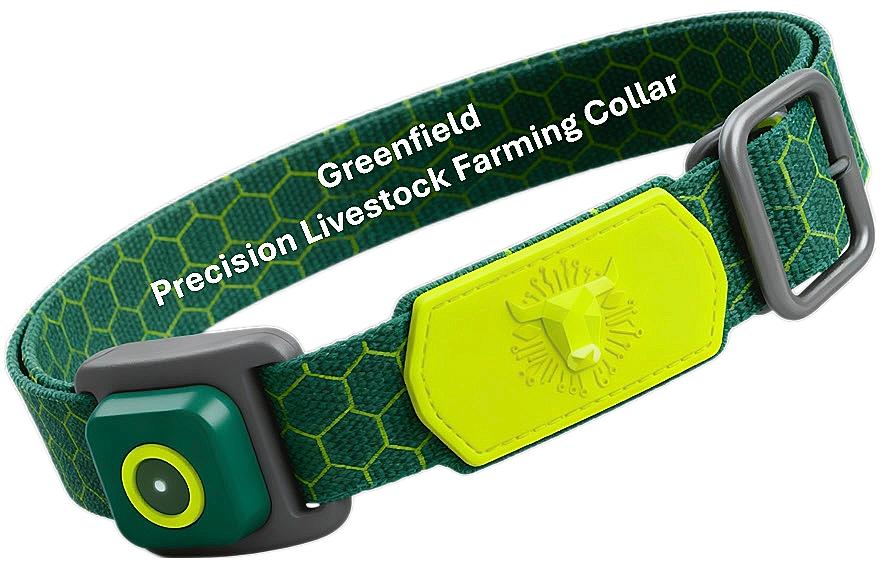
Greenfield Precision Livestock Farming Collar
Sustainable IoT for healthier herds
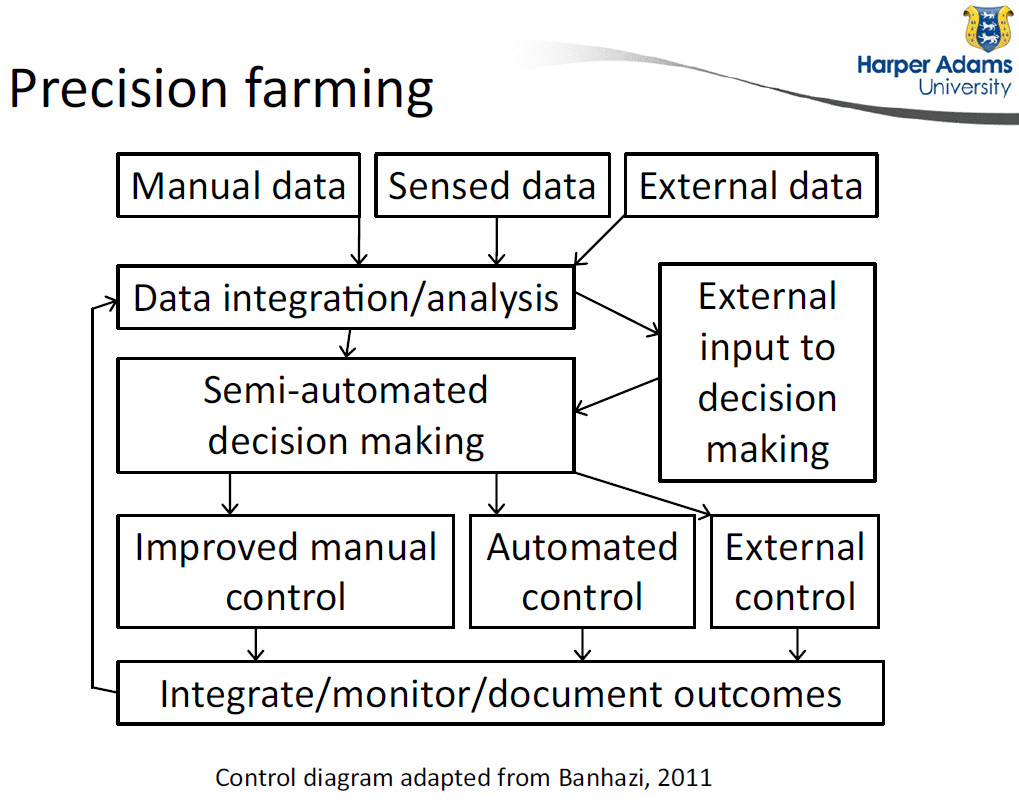
On-farm AI sensors sit at the core of precision livestock farming — measuring and managing variability at the individual-animal level, built for ruminants and dairy cows alike.
Bioacoustic monitoring
How it works
The energy in chewing sound scales with bite mass, so intake can be tracked acoustically. The ratio of bites to chews infers how much forage is available to the animal.
Greenfield vs. Merck SenseHub Dairy
A feature-by-feature comparison of collar capabilities.
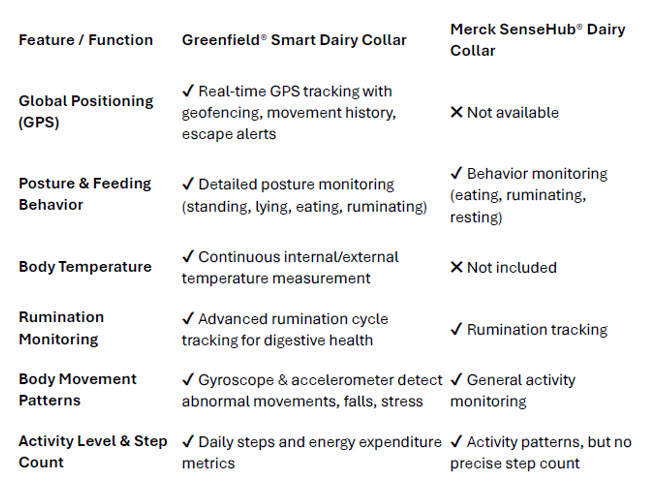
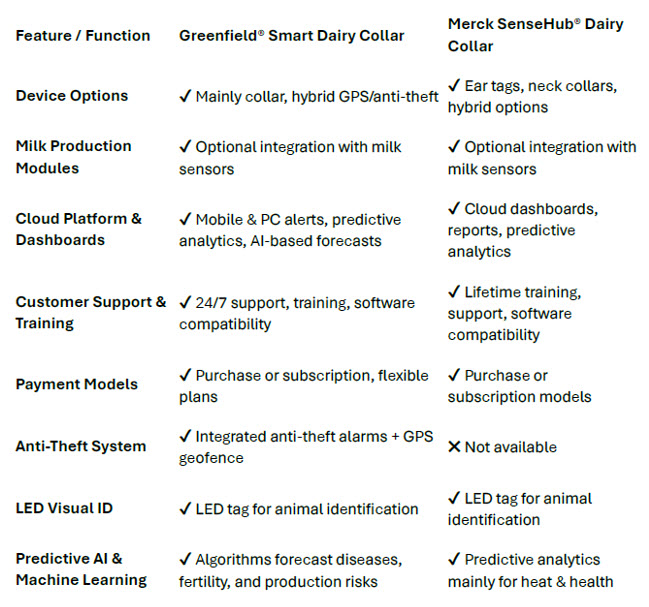
Greenfield differentiates itself with GPS tracking, body temperature monitoring, step counting, gait analysis, and an integrated anti-theft system. Merck SenseHub remains strong in large-scale herd management and reproduction monitoring, but lacks Greenfield's security and movement-analysis features.
Companion app
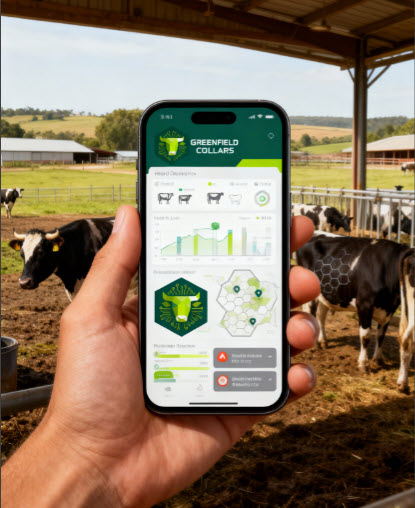
Herd overview, alerts, and predictive analytics from the field or the office — check individual animal status and geofence alerts from a phone.
Automated Equipment
21st-century cultivation, built on your farm
Soil-grown feed is exposed to groundwater contaminants. Growing above ground removes pesticides and harmful chemicals from the equation entirely — and the plant is built at the point of consumption, at our expense.
GHI 8000 cultivation process
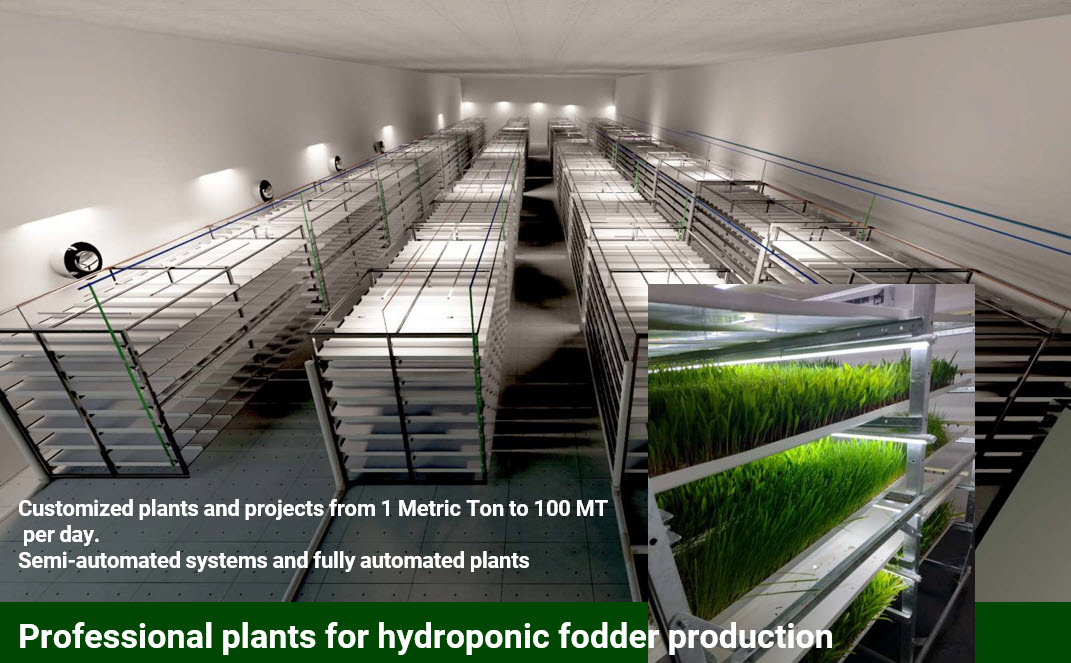
Six automated stages take grain from silo to harvested fodder mat.
Grain feeding
A stainless-steel or aluminum hopper meters 500 kg–1 ton per cycle from external storage into the line via electronically controlled gates.
Grain separation
Vibration screens remove broken grain; airflow suction clears dust and debris, processing 500–1,000 kg/h at 95%+ cleanliness.
Washing & disinfection
Pressurized rinsing, a non-aggressive disinfectant pass, and filtered drainage that recycles treated water — roughly 10–15 L per 100 kg of grain.
Conveyor distribution
Food-grade belts spread grain evenly across independent germination lanes, checked by weight sensors and optical cameras.
Germination & growth
Seven days under programmed micro-spray irrigation, red/blue-spectrum LED lighting, and real-time temperature and humidity control.
Harvest
On day seven the system automatically conveys the finished forage mat to an unloading belt for collection or direct delivery.
Control & specs
- Control system PLC + touchpad, remote monitoring
- Construction Aluminum, corrosion-resistant
- Hopper capacity 500 kg – 1 ton / cycle
- Separator throughput 500 – 1,000 kg/h
- Wash water use 10–15 L / 100 kg grain
- Cycle length 7 days, seed to harvest
No transportation cost. No waiting on feed deliveries — fodder is grown where your herd eats.
Off-Take Agreements
What is Fodder As A Service?
A supply model: we build and run the plant on your farm, you receive fresh fodder daily under contract — no equipment to buy, no capital outlay.
Sample agreement terms
Deal structure
- Initial 5–10 year term, per negotiation, renewable
- No investment capital required from customer
- GHI provides an agreed kg of fodder per day per cow
- Daily price per cow set per negotiation
- Payments made monthly, in advance
- Barley supplied by customer or GHI, per negotiation
Who provides what
- Customer: land, building, water, electricity, equipment insurance
- GHI: retains equipment ownership through the term
- GHI: handles all maintenance
- GHI: employs a plant operator to run the facility daily
- On termination, customer provides access for equipment removal
Green Juice, As A Service
Wheatgrass green juice, liquid or powder, now available under the same service model — hosted on greenfieldhydroponics.com.